by Stephanie Brown
“The stresses of life become smaller and I return home feeling relaxed and with a new resilience ready to conquer whatever the day or the week demands of me.”
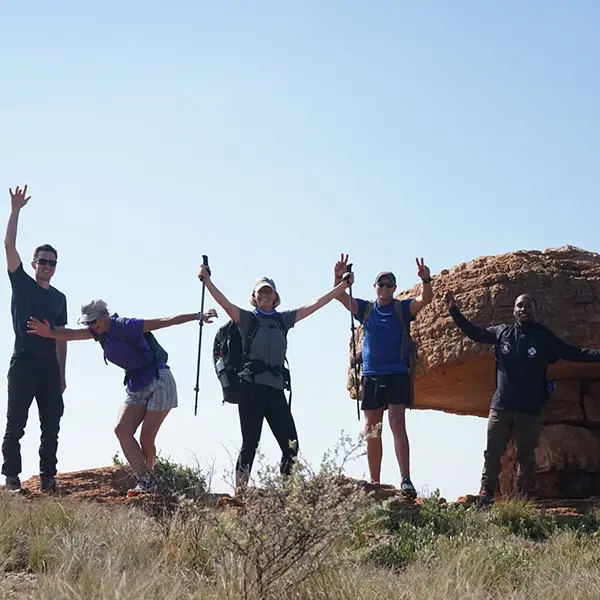
One lazy afternoon an old National Geographic and an article called “Space for the Soul” by science writer Jennifer Ackerman caught my eye (October 2006). Ackerman is a science writer and she was writing about the importance of green spaces in urban environments. Over the past few years, I have become an avid hiker. In the early days, I would sometimes dread the early mornings. Now I look forward to them. I love the hiking, but I love even more how it makes me feel. No matter what my week has been or my mood, I start to relax – almost immediately – and get this wonderful sense of tranquillity as I tramp along – sometimes chatting to my fellow hikers and, other times, enjoying my silence.
Ackerman’s article and my own sense of well-being from being in nature inspired me to read a little more. Written in 2006, Ackerman wrote a number of things that I found fascinating including that children are better able to concentrate when the spend time in nature. The same applies for adults – something called “voluntary attention”. The theory is that spending time in nature gives our brains a rest from the daily bombardment on our senses that comes from city life. I would add to this the bombardment of technology and the “always on” lifestyle that has become part of the human condition. Being out in nature gives our brains a rest and allows us to better focus on thinking and tasks. Ackerman’s article also cites research that shows the benefits of green spaces for children with attention deficit disorder (ADHD).
Some scientists speculate that the positive connection humans have with nature is evolutionary. Nature was the source of plants and animals – human beings thus derived great advantage from being in and understanding nature. Those closest to nature and the natural environment were best able to survive and thrive.
Since Ackerman published her article in 2006, there has been a growing body of research that tells us that being around trees is good for our physical and mental well-being. It’s not just about exercise and the well-being that comes from exercising and being out in nature. Trees themselves have the effect of lowering the incidence of depression, anxiety, cognitive decline and even chronic diseases like cardiovascular disease and cancer (September 8, 2021 interview on WBUR’s Radio Boston, Peter James, assistant professor, Harvard T.H. Chan School of Public Health’s Department of Environmental Health).
But isn’t the real test how we feel? I feel stronger when I hike. My muscles like it and my brain likes it. I know that a day – or even a few hours – out hiking rejuvenates me. The stresses of life become smaller and I return home feeling relaxed and with renewed resilience to conquer whatever the day or the week demands of me.
Kusudi La Hiking Club is a group of animal and nature enthusiasts who come together to hike, mainly around Johannesburg, every second weekend. We also do weekend get-aways. Our annual Kilimanjaro expedition comprises 25 animal lovers who climb Africa’s highest peak to raise funds for animals and the community.